
Starting an Antidepressant (SSRI or SNRI): What to Expect During the First Few Weeks
By: Joseph Han, PMHNP
The prescription is filled, maybe even the first dose already taken — and the question underneath it all is still there: did I make the right decision?
Whether the medication is being started for depression, anxiety, OCD, PTSD, panic disorder, or another condition, the first few weeks tend to raise the same questions: Is this working? Are these side effects normal? Should this be stopped?
SSRIs and SNRIs are commonly called "antidepressants," but they're used to treat a range of conditions beyond depression. This article isn't meant to say whether medication is the right choice — that's a decision made with a prescribing provider. It's meant to explain what the first few weeks commonly look like, and why staying in communication with your provider during that time matters.
This article is for educational purposes only and is not a substitute for individualized medical advice. Always discuss questions about your specific treatment with your prescribing clinician.
The First Few Days Are Often Uneventful
Unlike an antibiotic for an infection or ibuprofen for a headache, SSRIs and SNRIs don't produce immediate relief. It's common to take the medication for several days — sometimes over a week — without noticing any change, and to wonder whether it's doing anything at all.
That's expected. Most SSRIs and SNRIs work gradually, and meaningful improvement often takes several weeks to become noticeable. Some people notice subtle shifts earlier; others need more time. Neither pattern necessarily means the medication is or isn't working — it reflects how these medications work pharmacologically. This is exactly why follow-up appointments, rather than day-to-day self-assessment alone, are a core part of treatment.
Important Safety Information: FDA Boxed Warning
SSRIs and SNRIs carry an FDA boxed warning — the strongest warning the FDA issues — regarding an increased risk of suicidal thinking and behavior in children, adolescents, and young adults up to age 24, particularly during the first few weeks of treatment or following a dose change.
This risk does not mean these medications are unsafe or inappropriate to use — for many people, especially adults, they are a well-studied and effective treatment. It does mean that close monitoring during the early weeks of treatment is important for everyone, and especially for younger patients. Any new or worsening thoughts of self-harm, agitation, or unusual changes in mood or behavior should be reported to a provider immediately, and anyone in crisis should seek emergency care right away (see below).
Early Side Effects Don't Always Predict the Outcome
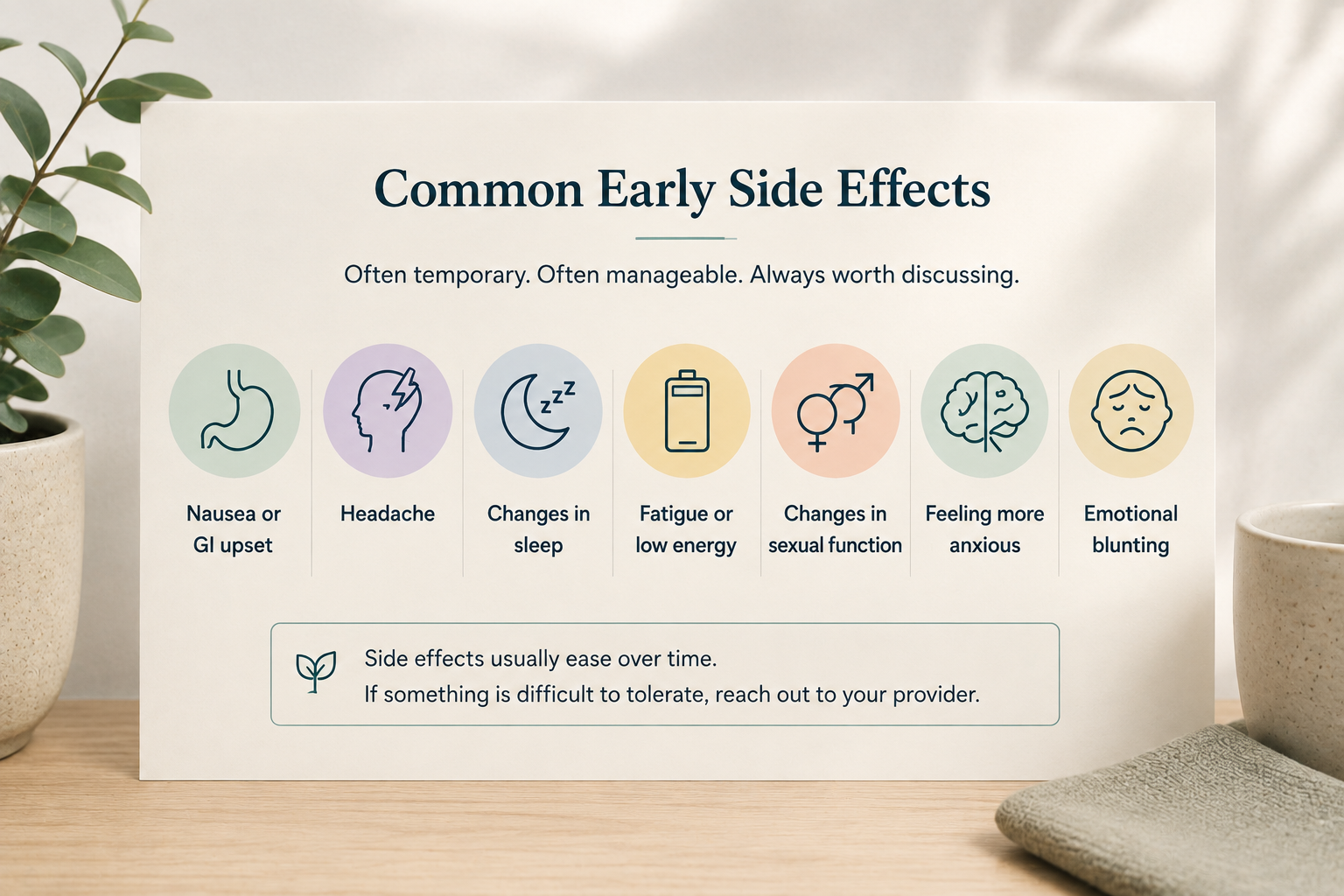
Mild side effects are common before benefits become noticeable. These may include temporary nausea, GI upset, headaches, changes in sleep, or feeling more fatigued or more activated than usual. Other effects are less commonly volunteered but worth naming directly: changes in sexual function (decreased libido, delayed orgasm, or difficulty with arousal) are among the most common SSRI/SNRI side effects and the least often brought up, and some people notice emotional blunting — feeling flatter or less reactive than usual, to both good and bad things. Neither is something to just live with quietly; both are worth raising with a provider, and options range from a dose adjustment to a medication switch. For many people, side effects overall ease as the body adjusts over the first one to two weeks.
That doesn't mean side effects should be pushed through silently. If they're difficult to tolerate, contact the prescriber rather than waiting it out or stopping alone — sometimes reassurance is all that's needed, other times a dose adjustment or different medication is a better fit. Whether a medication works well isn't only about symptom reduction; it's also about whether the side effect burden is one you can reasonably live with.
It's also worth telling your provider about every medication and supplement you're taking, including over-the-counter products and herbal supplements like St. John's Wort — combining SSRIs or SNRIs with certain other serotonergic medications increases the risk of serotonin syndrome, described below. A smaller number of people also notice weight changes, increased bleeding risk (particularly with NSAIDs or blood thinners), or changes in blood pressure or sodium levels — effects your provider will watch for based on your individual health history. Discussing alcohol use with your provider is worthwhile too, since it can interact with both the medication and the condition being treated.
Doubt Is a Normal Part of the Process
Around the second or third week, it's common to start wondering, "is this actually working?" That question doesn't necessarily mean it isn't. Improvement is sometimes gradual enough to be hard to notice from the inside — occasionally a partner or close friend notices a change first. Progress isn't always dramatic; sometimes it's only visible in hindsight.

What Providers Are Actually Assessing at Follow-Up
A follow-up visit is often assumed to be a single question — "do you feel better?" In practice, providers are usually weighing several things together: whether symptoms are improving, whether functioning at work, school, or home has changed, whether side effects are outweighing benefits or vice versa, and whether therapy or other parts of treatment are becoming more accessible.
The goal isn't finding a "perfect" medication. It's finding the one with the best overall balance of benefit, side effects, safety, and fit for the individual.
If a Dose Is Missed
Missing an occasional dose is common and usually not a cause for alarm. As a general rule, don't take two doses at once to make up for a missed one unless a provider specifically advises it — the right approach depends on the medication and timing, so check with a pharmacist or provider if unsure.
Don't Wait Until the Prescription Runs Out
If medication is lost or close to running out, contacting the provider's office promptly — rather than waiting — helps avoid an unplanned gap. Some SSRIs and SNRIs can cause uncomfortable discontinuation symptoms if stopped abruptly, and preventing an interruption is generally easier than managing one after the fact.
The same applies to wanting to stop the medication, whether due to side effects or feeling better: that's a decision to make together with a provider, not alone. There is often a better path than stopping abruptly.
When to Contact a Provider
Reach out to a prescriber if:
Side effects are difficult to tolerate
Stopping the medication is being considered
Medication has been lost or is about to run out
It's unclear whether a symptom is expected or concerning
There's concern the medication isn't helping
Many of these situations can be addressed with a dose adjustment, a timing change, a medication switch, or simply reassurance.
When to Seek Emergency Care
Serious reactions to SSRIs and SNRIs are uncommon, but knowing the warning signs matters. Call 911 (or the local emergency number) or go to the nearest emergency department immediately for:
Thoughts of harming yourself or someone else
Signs of a severe allergic reaction — difficulty breathing, or swelling of the face, lips, tongue, or throat
A dramatic change in mood or behavior, such as unusually elevated mood, a greatly reduced need for sleep, or impulsive/risky behavior, which could indicate mania
A combination of high fever, severe agitation or confusion, muscle rigidity or jerking, heavy sweating, shaking, or a rapid heartbeat — especially soon after starting or increasing a medication, or combining serotonergic medications. This combination can indicate serotonin syndrome, a rare but medically urgent condition.
Any severe or rapidly worsening symptoms that feel unsafe
If you're experiencing a mental health crisis in the United States, call or text 988 to reach the Suicide & Crisis Lifeline.
The Prescription Is the Beginning, Not the Treatment Itself
The first few weeks are a period of observation, communication, and adjustment — not a passive waiting period. Provider and patient are, together, learning how the individual responds, weighing benefit against side effect, and making changes when needed.
The goal isn't only symptom reduction. It's making it easier to engage with work, relationships, therapy, and the life the patient is trying to build.
Questions Worth Asking
How long before we know if this is working? What side effects should prompt a call? What's the next step if this isn't the right fit?
About This Practice
Joseph Han, PMHNP, provides psychiatric evaluation and medication management for adults across New York State, including New York City, Brooklyn, Manhattan, and Staten Island. Every treatment plan starts with a thorough, individualized evaluation, and ongoing follow-up is built into care from the start.
If you're starting or considering an antidepressant and want support navigating the process, click here to book an intro call.
This article is intended for educational purposes only and does not establish a provider-patient relationship. It should not be used as a substitute for individualized medical advice, diagnosis, or treatment. If you are experiencing a mental health crisis, call or text 988 or seek emergency care.